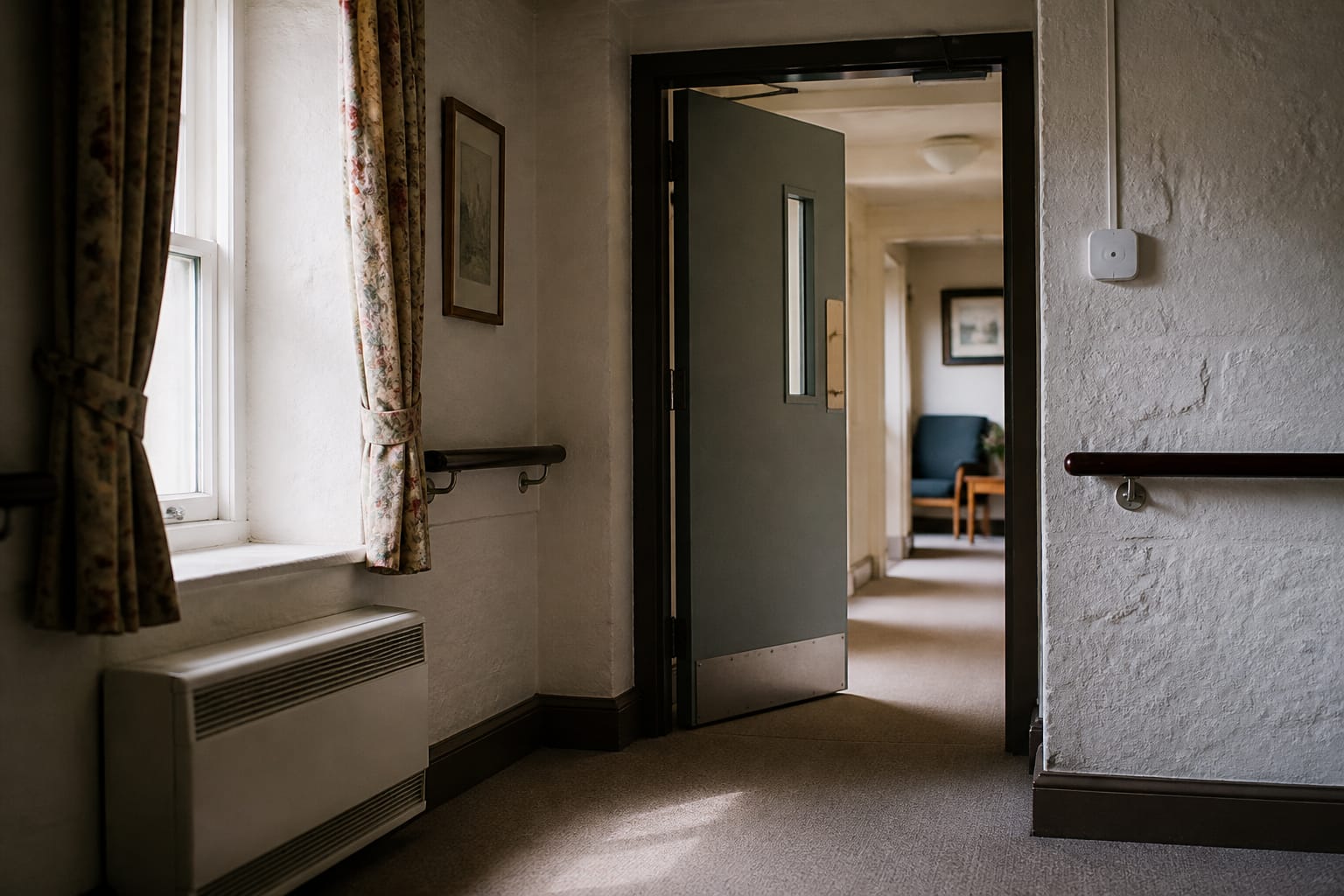
Wireless call button signals can be blocked by a number of physical objects. The reason a wireless call button does not seem to work can often be found by understanding the physical environment of the call button.
Thick Masonry, Stone Or Concrete Walls
Many older UK care homes for the elderly, hotels and pubs are made of solid construction such as thick masonry, stone or concrete. Many of these older buildings have been constructed without any cavities between the outer and inner skin of the building. The signal from wireless wall call points will deteriorate as it passes through solid construction. For councils and care providers who offer support for assistive technology in care settings this can present a problem for support for assistive technology in care settings.
Metal Structures In The Building
Other obstruction examples are the reflection and absorption of radio waves by metal structures such as lift shafts, large steel fire doors, filing cabinets and galvanised ductwork. If a call point is placed near a lift shaft or on the wrong side of a fire door that contains metal in its construction then the call point may appear to work during the commissioning test but then cease to work when the fire door is shut or the lift is in use.
Low-E Glass And Foil-Backed Insulation
Special coatings on energy efficient glazing such as low-E glass create a thin metallic layer to reflect heat. Similarly, some types of foil-backed insulation panels are designed to create a warm barrier and absorb thermal energy. These types of products can act similarly to a Faraday cage and ‘reflect’ wireless signals, preventing them from passing through a window or even a stud wall. This problem is often encountered in newly refurbished premises where the improved thermal performance has an unexpected side effect on wireless signals.
Large Amounts Of Standing Water
A large amount of standing water, e.g. a fish tank, a header tank, a hot water cylinder or large amounts of water in commercial kitchen equipment can also have an effect on wireless signals. Wireless signals travel through the air and are easily absorbed by liquids. A call point fitted to a wall where there is a large amount of water on the other side of the wall, or near to commercial kitchen equipment with large water reservoirs, will have a shorter range than the same call point fitted in a different location in the same room.
Interference From Other 2.4GHz Devices
Wireless devices such as Wi-Fi routers, microwave ovens and baby monitors often operate on the same part of the spectrum as short-range wireless call systems and can interfere with them. A call button that works perfectly at 10 am can have signal dropouts at lunchtime due to interference from three microwaves and a dozen or so phones in the vicinity. Regulatory guidance on the shared radio frequencies used by short-range wireless devices is given in the section on the shared radio frequencies used by short-range wireless devices.
Dense Electrical Wiring And Large Motors
Even with well specified Wireless Call Buttons with strong receivers and the best operating frequency for your application, interference with wireless signals can occur. This is particularly prevalent near large amounts of electrical wiring such as found near plant rooms, lift motor housings or commercial kitchen extraction units. This is one of the many reasons for the sector specific testing for wireless telecare and alarm equipment for signal strength in an empty room and in the presence of interference.
Multiple Floors Or Long Distances
The signal may have to pass through several obstacles in a building. If a signal has to pass up through two floors, along a long corridor and through a steel fire door then even though each of these is only a slight weak point on its own, the overall effect can be to create a large dead area.
Overcrowded Spectrum In Multi-Occupancy Buildings
In shared office space, shops or other mixed use buildings there are many independent users of wireless call systems, alarm systems and other wireless equipment including Wi-Fi. In fact the overcrowding of the wireless spectrum in such premises is a recognised problem in multi-tenant buildings and has caused problems for individual call systems installed on a floor by floor basis. Published guidance for telecare and assistive call systems highlights the potential problems in such premises where individual systems have been installed on a floor by floor basis with little or no coordination between neighbouring users.
Most of these problems can be worked around once you have established the cause. This might involve repositioning a receiver, repositioning a button, or simply being aware of an obstacle on the other side of a wall.
